

To get your coastal HVAC system ready for the colder months, heat pump winter prep Florida homeowners rely on requires clearing salty debris from the outdoor condenser coils, inspecting electrical contacts, replacing dirty air filters, testing heating mode before temperatures drop, and applying a protective anti-corrosion barrier to shield sensitive metals from coastal air.
Why Coastal Florida Homes Require Unique Winter Heat Pump Care
Florida winters are vastly different from the freezing, snow-laden seasons experienced in northern states. However, coastal homeowners face a unique combination of factors that can damage heating and cooling systems if left unchecked: high humidity, salt-laden sea air, sand accumulation, and sudden temperature dips.
When winter arrives along the shoreline, heat pumps shift from continuous cooling mode to intermittent heating mode. If coastal salt spray, sand, and moisture have accumulated on the outdoor coil, turning on the auxiliary heat can trigger foul odors, inefficiency, or complete equipment failure. Proper preparation ensures smooth seasonal transitions without unexpected breakdowns.
Essential Coastal HVAC Maintenance Tips for Florida Homeowners
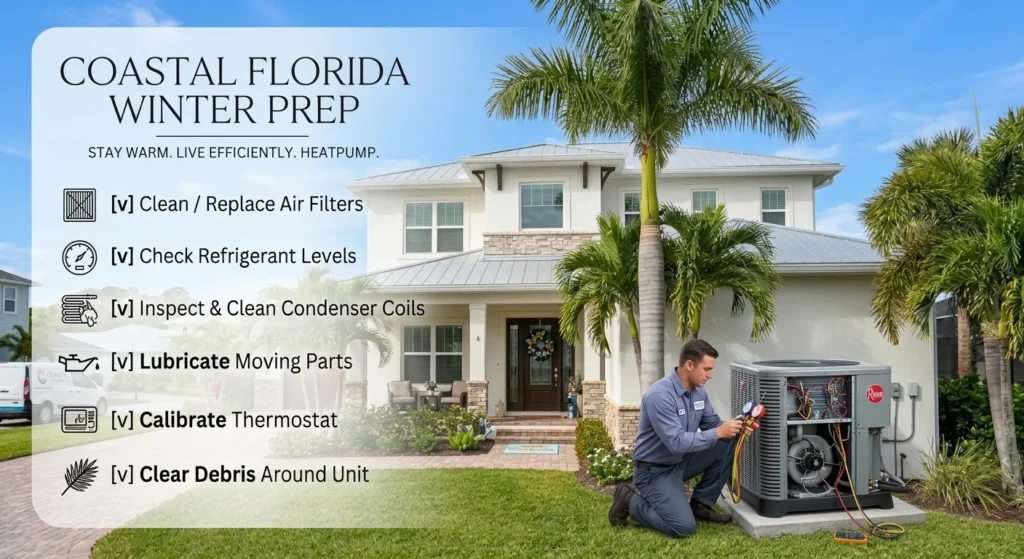
Keeping a coastal heat pump operating at peak performance demands tailored attention. Follow these specific steps to protect your heating system and preserve indoor air quality.
1. Remove Salt Air and Sand Accumulation
Salt air heat pump protection begins with regular cleaning. Sea salt is highly hydroscopic, drawing ambient moisture to outdoor components and accelerating chemical corrosion.
- Rinse the Outdoor Unit: Turn off power at the breaker box and gently wash the condenser unit with a standard garden hose. Avoid using high-pressure power washers, as they bend fragile coil fins.
- Clear Vegetation: Keep grass, shrubs, and sand drifts back at least 2 feet from all sides of the outdoor cabinet to maintain unrestricted airflow.
- Clean the Base Pan: Remove trapped leaves and damp debris from the bottom pan to ensure condensate drain holes remain clear.
2. Guard Against Salt Air Corrosion and Metal Rust
Preventing rust on outdoor heat pump unit components is vital for homes situated within a few miles of the ocean or Gulf coast.
- Apply Protective Coatings: Professional technicians apply specialized anti-corrosion marine coatings or coil protectants to insulate copper tubing and aluminum fins from airborne salt ions.
- Inspect Fin integrity: Check for signs of white, powdery residue or flaking metal, which indicate salt-induced oxidation. Early detection prevents refrigerant leaks.
- Secure Fasteners: Salt air rapidly corrodes exposed metal screws and mounting brackets. Swap damaged steel hardware with marine-grade stainless steel alternatives.
3. Check Indoor Air Quality and Filter Efficiency
During winter, coastal humidity can linger even when outdoor air feels cooler. Running your system with clogged filters restricts airflow, straining the blower motor and increasing electricity bills.
- Upgrade Air Filters: Use high-efficiency filters rated MERV 8 to 11 to trap fine sand dust, mold spores, and salt particles.
- Inspect Thermostat Calibration: Test your thermostat to ensure accurate readings when switching between cool, heat, and auto modes.
For comprehensive maintenance routines, explore our professional guide on HVAC Maintenance to keep your system performing efficiently through every season.
Step-by-Step DIY Winter Prep Checklist for Coastline Heat Pumps
| Maintenance Task | Primary Focus | Recommended Frequency |
| Coil Freshwater Rinse | Rinsing sea salt deposits off aluminum fins | Monthly (Coastal regions) |
| Air Filter Replacement | Preserving airflow & removing coastal dust | Every 30 to 60 Days |
| Debris Clearance | Removing sand, weeds, and leaves around base | Bi-weekly |
| System Test Run | Testing heating mode and checking auxiliary heat | Late Fall (October/November) |
| Professional Inspection | Deep electrical, mechanical, and refrigerant checks | Twice Annually |
Safety Controls, Operational Limits, and Emergency Steps
While basic exterior cleaning is safe for homeowners, certain technical tasks require certified HVAC expertise. Understanding safety boundaries prevents accidental injuries and system damage.
What You Can Safely Do Yourself
- Visual inspections of cabinets, duct registers, and return grilles.
- Replacing standard air filters.
- Flushing outdoor cabinets with low-pressure fresh water.
- Clearing clear vegetation and debris surrounding the outside pad.
When to Call a Certified Professional
- Refrigerant Line Service: Handling refrigerants requires EPA certification. Never attempt to adjust levels or patch line leaks yourself.
- Electrical System Inspection: Capacitors store high voltage even when main power is disconnected. Contact technicians to inspect contactors, wiring, and relays.
- Reversing Valve Diagnostics: If your heat pump fails to switch from cooling to heating, the reversing valve or solenoid coil requires professional diagnosis.
If your heat pump fails to produce warm air, emits burning odors lasting longer than 10 minutes, or makes grinding noises, switch the system off immediately and schedule an inspection through our HVAC Service team.
Local Relevance: Navigating Florida’s Coastal Microclimates
Living along Florida’s shoreline presents microclimate conditions distinct from inland communities. Nearby saltwater bays, ocean tides, and tropical storms create constant salt misting and windblown sand that accelerate equipment deterioration.
Inland systems typically last 12 to 15 years, but unprotected coastal heat pumps can show critical corrosion within 5 to 7 years. Regular preventative care preserves your manufacturer warranty and keeps energy consumption manageable during winter cold snaps.
When systems near the end of their functional service life due to severe coastal weathering, installing a modern, corrosion-resistant replacement is the most cost-effective option. Learn more about system sizing and equipment options on our HVAC Installation page.
Why Professional Tune-Ups Outperform DIY Solutions
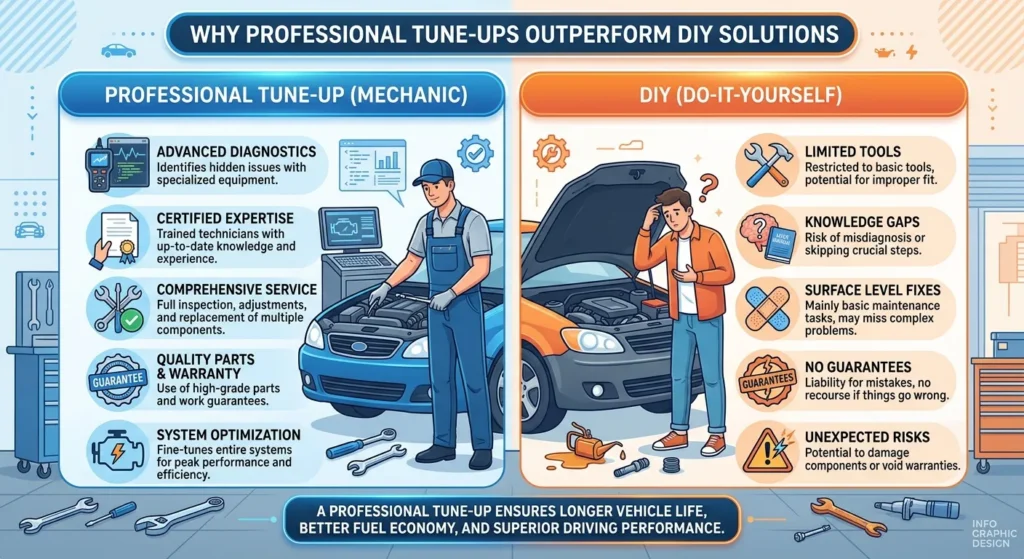
While routine home care helps delay surface wear, professional tune-ups go deeper into mechanical and electrical health:
- Refrigerant Charge Verification: Correct refrigerant levels ensure optimal heat transfer in heat mode.
- Electrical Tightening and Amp Draw Analysis: Prevents sudden breaker trips during winter heating spikes.
- Internal Coil Cleaning: Removes stubborn grime that garden hoses cannot reach.
- Blower Motor and Belt Checks: Ensures smooth, quiet air delivery throughout your entire home.
To learn about seasonal service packages and routine care plans designed specifically for Florida homeowners, check out our details on Air Conditioning Service.